
Minimally Invasive Mitral Valve Surgery via the Armpit: A Gentle Doorway to the Heart
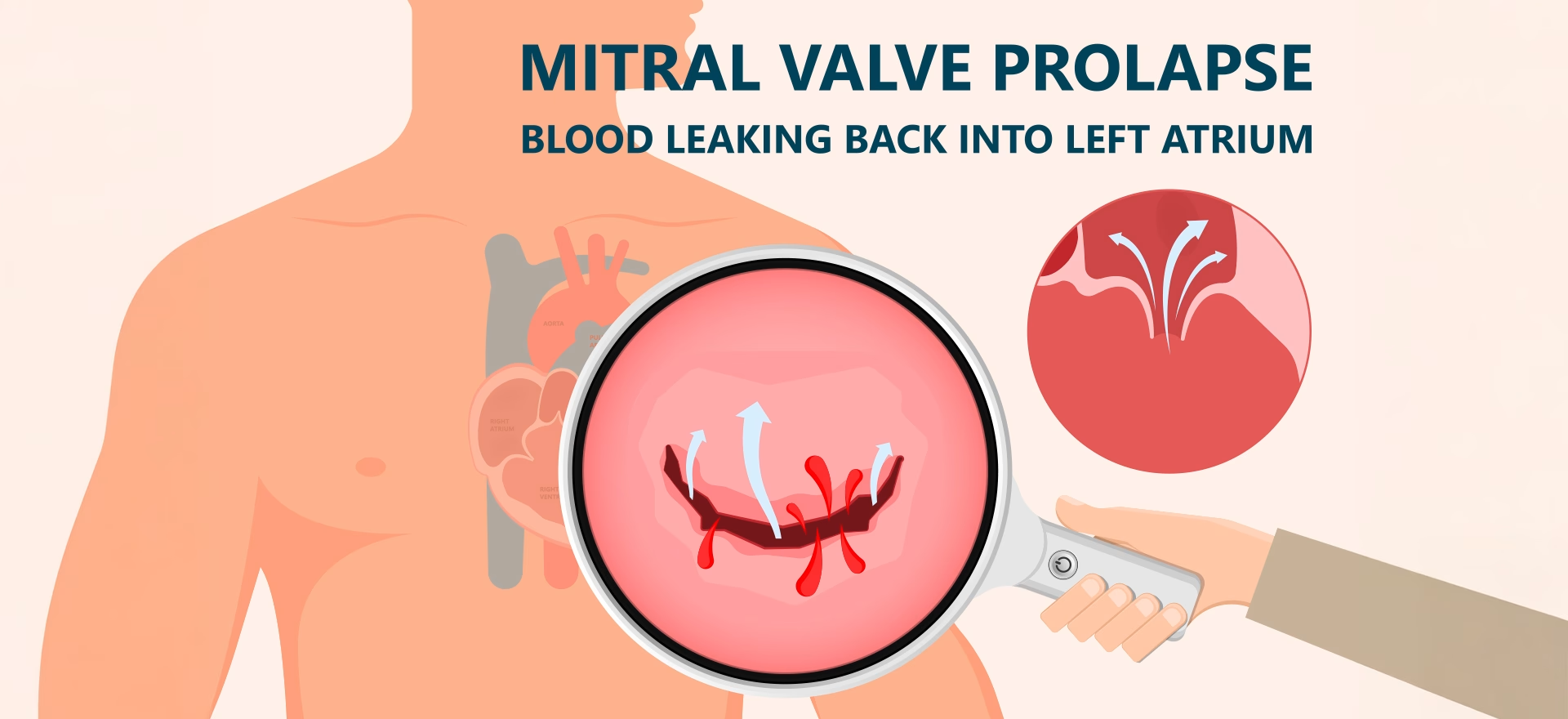
Our heart is an awe-inspiring organ that beats approximately one hundred thousand times a day and works tirelessly. One of the unsung heroes of this tremendous effort is the mitral valve. Located between the left atrium and the left ventricle, this valve ensures that blood flows in the correct direction. When it malfunctions, it can lead to shortness of breath, fatigue, palpitations, chest pain, and a significant decline in quality of life.
For many years, mitral valve surgery involved opening the sternum from top to bottom. Today, however, advances in surgical technology and experience mean we can access the heart through a much smaller opening. We call this method minimally invasive mitral valve surgery, and in most patients it can be performed through a 6-8 centimetre incision made in the armpit.
What is the Minimally Invasive Approach?
In this approach, the sternum is not cut. That is, without opening the bone commonly known as the ‘breastbone,’ we reach the mitral valve through a small incision between the ribs. We perform valve repair or replacement using special camera systems, retractors, and long surgical instruments.
As a result:
- Smaller incision
- Less tissue trauma
- Faster recovery.
Who is Eligible?
Mitral valve surgery can be performed minimally invasively in almost all patients; however, eligibility is determined by a detailed assessment conducted by a Cardiovascular Surgeon experienced in Minimally Invasive Cardiac Surgery.
Generally speaking, individuals with mitral valve stenosis or insufficiency whose heart and lung function is suitable for surgery and who do not have additional cardiac pathologies requiring sternotomy may be candidates for this method. The decision is made by a heart and vascular surgeon experienced in minimally invasive cardiac surgery.
The most important advantage: No opening of the sternum
The most significant advantage of this method for the patient is as follows:
✔ The sternum is not opened
✔ The diaphragm is not cut
As a natural consequence:
- There is less pain
- The risk of infection and bleeding is reduced
- It becomes easier for the patient to move and breathe deeply
- The healing process is significantly accelerated
- The patient returns to their daily life more quickly
It also provides significant cosmetic comfort, particularly for younger patients and women, as the surgical scar remains within the natural creases of the armpit.
Repair or Replacement?
Where possible, we prefer to preserve the valve by repairing it. However, in some cases, if the valve tissue is severely damaged, valve replacement is necessary. Metal or biological valve options are available.
When making the choice:
- Age
- Comorbidities
- Use of anticoagulants
- Lifestyle are considered together.
What Happens After Surgery?
- Thanks to the minimally invasive approach:
- You can get out of bed sooner
- Breathing exercises are easier to perform
- Hospital stay is shorter
- Recovery and return to daily life are accelerated
I Would Like to Emphasise:
This is not a ‘minor surgery’. Major surgery is performed through a small incision. The seriousness is the same, but the trauma is less.
Final word
Cardiac surgery is now advancing not only through smaller incisions, but also through the elegance of touch. Minimally invasive mitral valve surgery performed through the armpit is a powerful embodiment of the concept of ‘more benefit with less trauma.’ As a surgeon who has worked in this field for years and successfully performed these operations, I see that this method provides significant physical and psychological comfort in suitable patients.
The essence of the method is as follows:
- Performing the surgery without opening the sternum (breastbone)
- Lessening the strain on the patient
- Being gentler on the heart and surrounding tissues
- Accelerating the healing process by reducing pain and bleeding
- Returning the patient to their life and work more quickly
If you have any complaints, consult a cardiologist and cardiovascular surgeon without delay. Trust your doctor’s face-to-face assessment, not random information found online. Your heart works for you throughout your life. Taking good care of it is our most valuable duty.

